
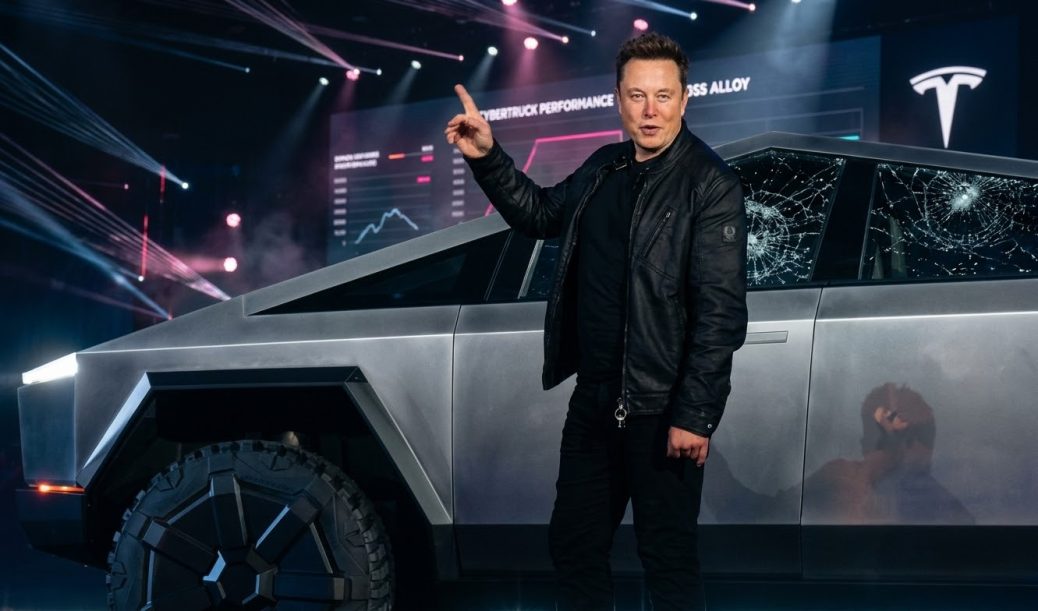
Elon Musk has announced that Tesla plans to stop producing its Cybertruck by mid-2027, as the company shifts its attention towards developing self-driving Cybercabs.
The announcement could disappoint thousands of customers who have already placed orders. Musk says demand for the Cybertruck is higher than Tesla’s production capacity, meaning many buyers may never receive their vehicles and will instead have their deposits refunded.
In a post on X on Monday, Musk said Tesla would try to produce as many Cybertrucks as possible before shutting down the production line in about eight months.
The news has prompted some Tesla enthusiasts to place new orders or upgrade existing ones before production ends. However, Tesla’s website was still accepting orders as of Monday.
Musk explained that the decision wasn’t because the Cybertruck was unprofitable. Rather, Tesla believes that using its production capacity to build more Cybercabs would create greater value for the company.
Despite its bold, futuristic design and loyal fan base, the Cybertruck has struggled to achieve strong sales since its launch in 2023. Sales dropped 48% between 2024 and 2025, falling from 38,965 to 20,237 vehicles.
By comparison, Tesla sold an estimated 11,586 Cybertrucks in the first three quarters of 2026, while sales of its Model Y and Model 3 reached 262,491 and 106,962 respectively over the same period.
The move reflects Musk’s growing interest in autonomous vehicles and robotics, rather than traditional car manufacturing. Tesla has already discontinued other models, including the Model S and Model X, as it narrows its vehicle lineup.
Tesla’s Vision: A Future Without Car Ownership?
Musk’s long-term vision centers on the Cybercab, a fully autonomous vehicle designed to operate as a self-driving taxi.
He believes people could eventually rely on affordable robotaxis instead of owning personal vehicles, saving money on car purchases, insurance, maintenance and parking.
When Tesla introduced the Cybercab concept in 2024, Elon Musk predicted that rides could cost as little as 30–40 cents per mile. He also argued that most privately owned cars spend much of their time parked and could be used more efficiently if they were autonomous.
However, not everyone agrees with this vision.
Some Tesla customers have criticized the company for abandoning the Cybertruck and reducing vehicle choices while prioritizing a future built around robotaxis.
Others question whether consumers will genuinely want to give up the convenience and independence of owning their own vehicles in favor of shared, self-driving transportation.
For now, Tesla’s decision marks another major shift in the company’s direction, raising questions about its commitment to traditional electric vehicles and the customers who helped build its brand.
